

Quick Answer: Window condensation in winter occurs when warm, moist indoor air collides with the freezing cold surface of your glass panes. You can stop this sweating by lowering your indoor humidity levels, upgrading to double or triple-pane glass, and installing a Heat Recovery Ventilation (HRV) system to exchange stale indoor air for fresh outdoor air without losing your home’s heat.
What Exactly Causes Condensation on Windows During Cold Weather?
Discovering water droplets forming on your window panes is a very common scenario for Canadians. The incredibly low outdoor temperatures drastically cool the glass of your windows. Here is the exact scientific process behind the sweat:
- Temperature Drop: Extreme winter weather turns your window glass into an ice-cold surface.
- Moisture Collision: Warm air inside your home (filled with moisture from breathing and cooking) hits the cold glass.
- Dew Point Reached: The warm air rapidly cools down and can no longer hold its water vapour.
- Liquid Forms: The vapour turns into liquid water droplets directly on your glass.
Dealing with window condensation in winter is a clear sign that your indoor humidity is simply too high for the current outdoor temperature.
How to Fix Window Condensation
We know that seeing the problem firsthand makes it much easier to solve. We put together a comprehensive video guide showing you exactly how to tackle sweating windows head-on.
You can see the real-time effects of poor ventilation and watch our experts implement permanent solutions. Check out our detailed video breakdown below.
Why Is Moisture on Window Panes Dangerous for Your Family?
The fogged glass caused by these water droplets looks incredibly unappealing. However, the aesthetic issue is the absolute least of your worries. If left untreated, this trapped moisture causes severe damage.
- Structural Rot: Water pools on your wooden sills and rots the window frames over time.
- Mould Breeding Ground: Damp environments allow black mould spores to spread rapidly.
- Health Hazards: Mould severely contaminates your indoor air quality and triggers asthma and allergies.
You must clean the mould as soon as it is discovered using a dedicated fungicide. According to the Health Canada guidelines on indoor mould, controlling moisture is the only permanent way to stop fungal growth.
What Are the Fastest Ways for Reducing Indoor Humidity?
Poor ventilation in your home will always make condensation worse. The moisture from cooking, bathing, and even breathing simply builds up inside. You must take proactive daily steps to keep window sweat under strict control.
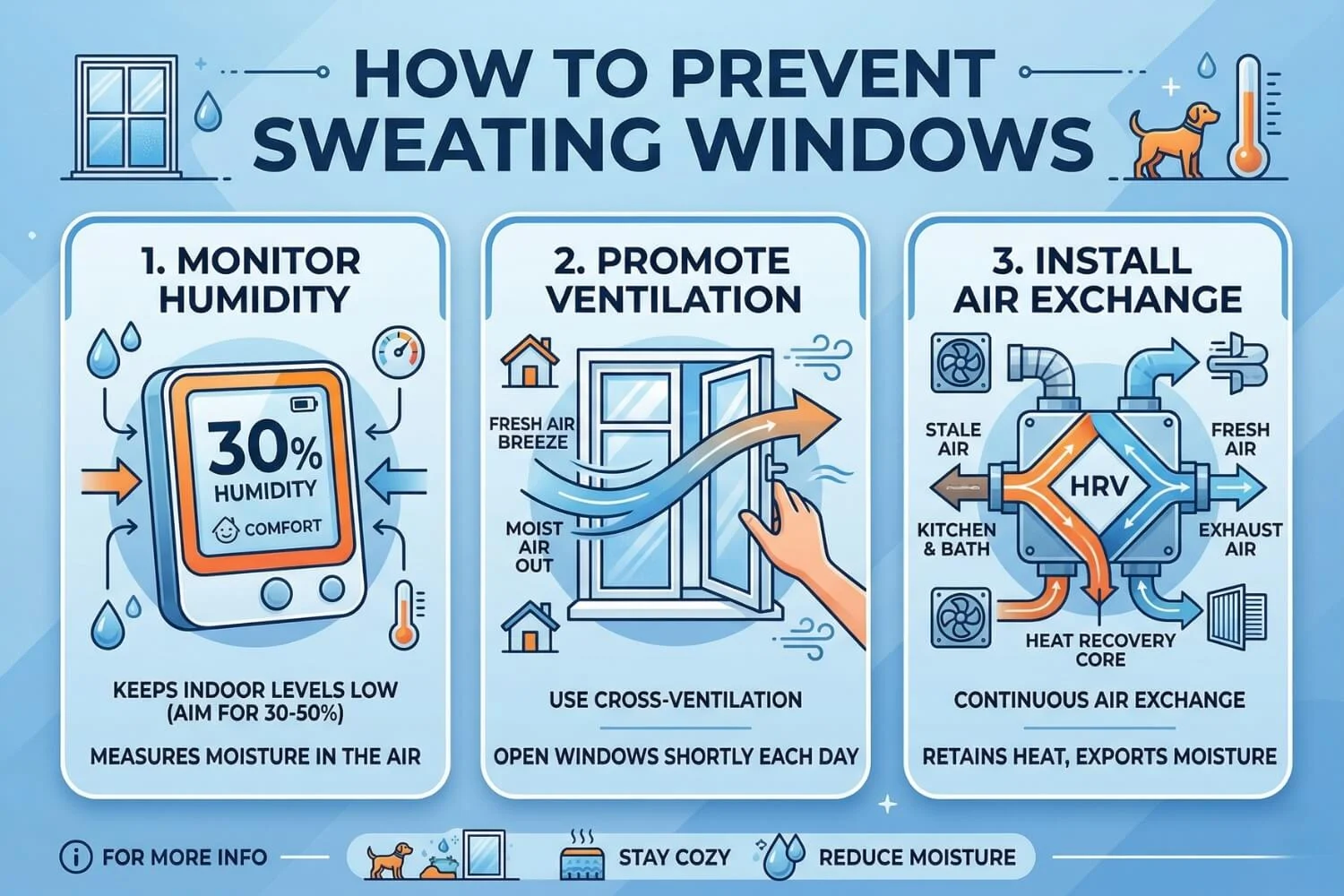
- Run mechanical exhaust fans: Always turn on the bathroom fan when showering and the range hood when boiling water.
- Open curtains during the day: Allowing warm furnace air to circulate against the glass helps evaporate resting moisture.
- Relocate your houseplants: Plants release a massive amount of moisture into the air, so keep them far away from cold windows.
- Adjust your humidifier: If you have a whole-home humidifier attached to your furnace, lower the setting immediately when the outdoor temperature drops.
What Is the Ideal Indoor Humidity for Canadian Homes?
To successfully combat window condensation in winter, you need to monitor your indoor humidity levels carefully. You can easily track this daily using an inexpensive digital hygrometer.
As the temperature outside drops, the humidity inside your home must also drop. Keeping your home within these exact optimal ranges will protect your expensive windows and your health.
| Outdoor Temperature (Celsius) | Recommended Maximum Indoor Humidity |
|---|---|
| Above 10°C | 50% |
| 0°C to 10°C | 45% |
| -10°C to 0°C | 40% |
| -20°C to -10°C | 30% |
| Below -20°C | 15% to 20% |
Drafty Old Windows vs. Modern HRV Systems
There is a strange irony regarding old windows. If your windows have broken seals, they actually provide passive ventilation by letting dry winter air inside. However, this accidental airflow wastes expensive furnace heat.
It is incredibly wise to seal leaks and seek controlled ventilation elsewhere. Heat recovery ventilation (HRV) systems are a fantastic condensation-combating solution. Here is how proper mechanical ventilation compares to relying on leaky windows.
| Feature | Drafty Old Windows | Heat Recovery Ventilation (HRV) |
|---|---|---|
| Moisture Control | Unpredictable and inconsistent. | Actively exhausts wet, stale air outside. |
| Heat Loss | Massive. Expensive furnace heat escapes easily. | Minimal. Transfers heat from outgoing air to incoming air. |
| Air Quality | Brings in unfiltered outdoor air. | Pulls in fresh, crisp, and filtered outdoor air. |
| Energy Bills | Drastically increases heating costs. | Lowers costs by maintaining an airtight home envelope. |
By upgrading your home’s envelope, you retain heat and save money long-term. You can learn more by exploring our guide to modern window installations.
What Should You Do If the Condensation Is Between the Panes?
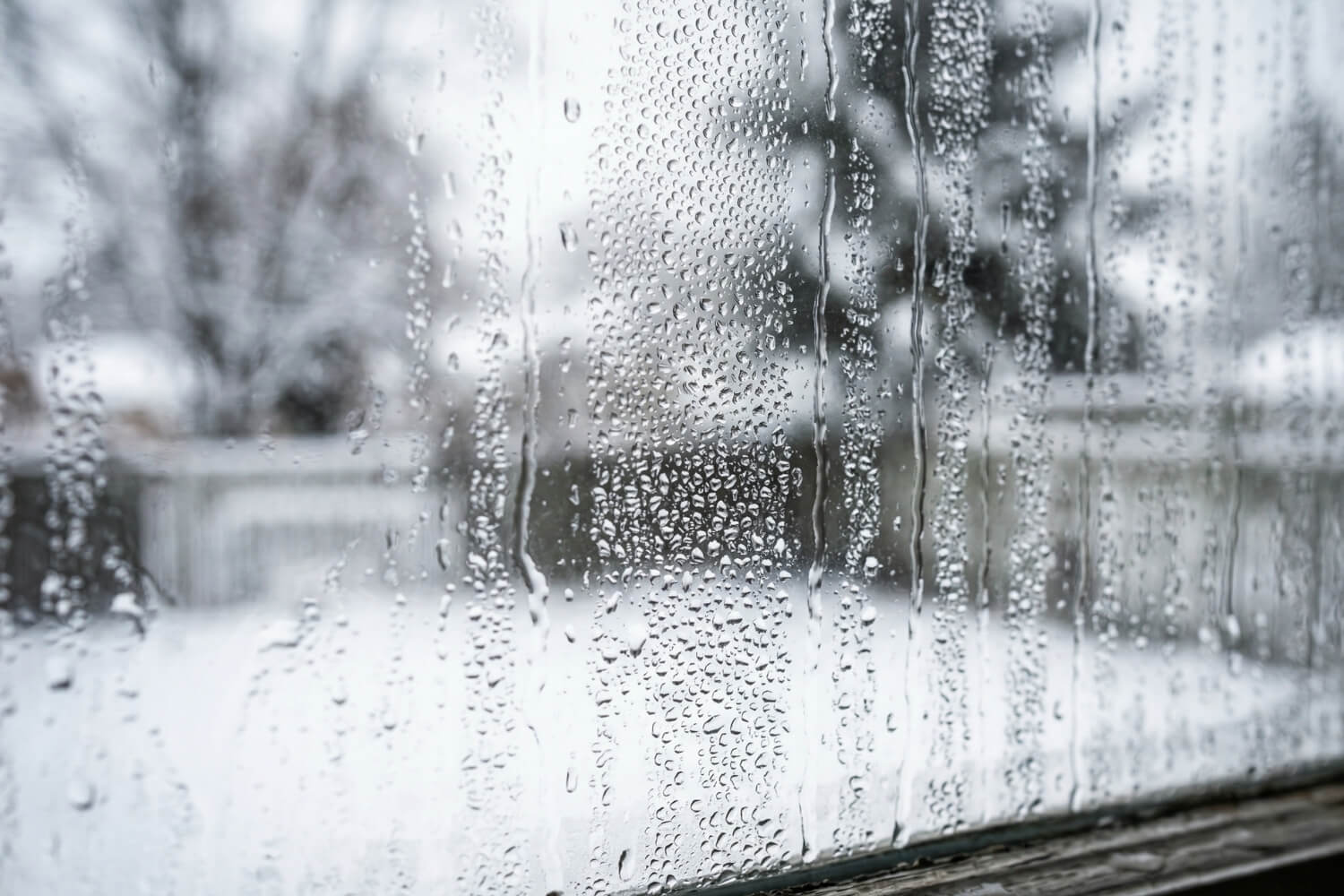
Wiping down wet glass on the inside of your home is an annoying but manageable chore. However, if you notice water droplets trapped entirely between your double or triple glass panes, you have a much bigger problem.
This means the airtight seal on your insulated glass unit has completely failed. The insulating argon gas has escaped permanently, and regular outside air has replaced it. There is absolutely no way to wipe this away or fix it with a dehumidifier.
Once a seal is blown, the window has lost its core insulating value. The only permanent fix for this specific issue is a total glass replacement. You can check out our comprehensive glass replacement services if your views are permanently blocked by internal fog.
Are You Ready to Stop Window Condensation in Winter for Good?
Dry windows and increased ventilation are the ultimate keys to ensuring a healthy, comfortable home for you and your family. Nobody should have to spend their winter mornings wiping down wet window sills with a towel.
By monitoring your humidity levels, utilizing exhaust fans, and potentially installing an HRV, you can eliminate window condensation in winter entirely. If you suspect your old windows are contributing to the problem through poor insulation, we are here to help.
Would you like us to drop by your house for a free estimate?
Book a FREE at-home estimate today with our expert team:
- Winnipeg: (204) 272-3725
- Toronto/GTA: (905) 326-3444
- Calgary: (403) 451-5756